DISTRIBUTION AND HABITAT
Africa and Asia. Open grasslands, semi-arid landscapes, savannas, dry forests, mountain environments. In Iran: plains, saltpans.
BEHAVIOUR
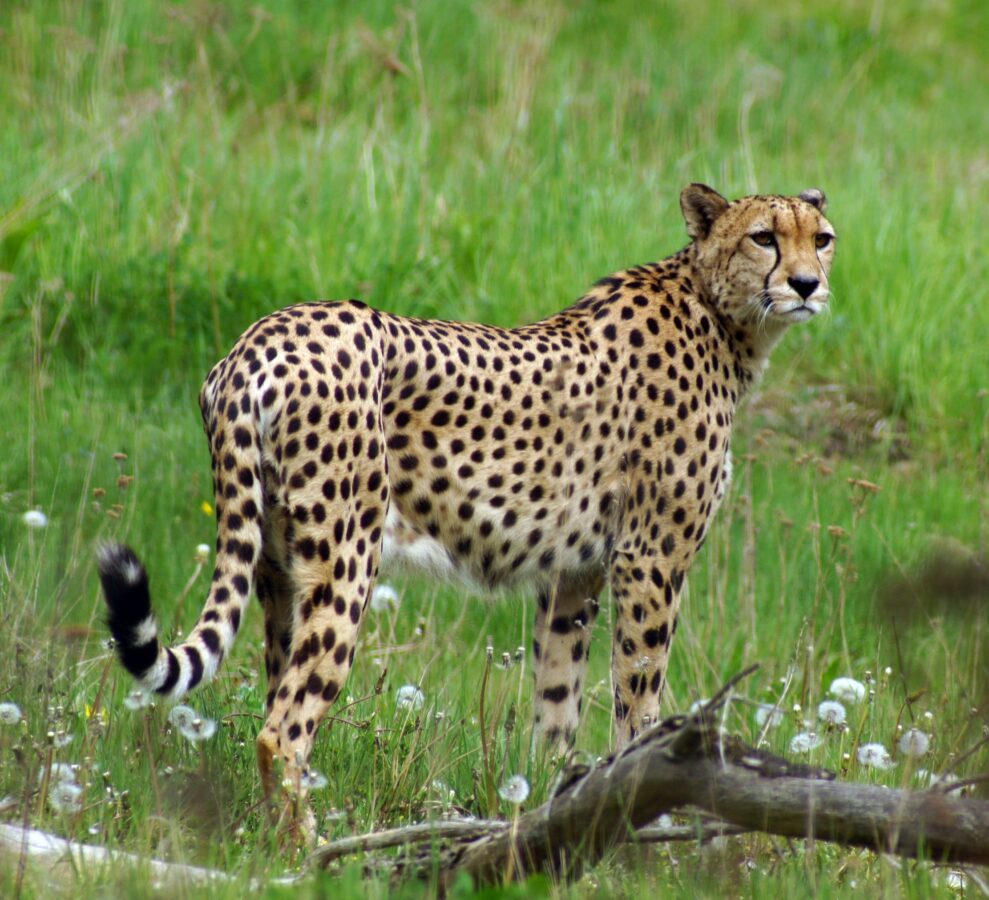
Mainly active during the day. When chasing prey, it can reach speeds of over 100 km / h over short distances. Long limbs, a flexible spine, a relatively small head, and large nostrils that allow more air to be drawn into the lungs make it suitable for a quick chase.
DIET
It hunts for gazelles, impalas and other smaller antelopes, warthogs, hares, and birds.
REPRODUCTION
Gestation: 3 months. The female gives birth to 4 to 6 young, whom she looks after for about 1.5 years. Life expectancy: up to 14 years in the wild, up to 20 years in the zoo. Adult body mass : 35 – 65 kg.
GOOD TO KNOW
The main threats to the species are: loss and fragmentation of habitats, reduction of the natural food base, illegal hunting, trade in skins and live young cheetahs.
- Latin name: Acinonyx jubatus
- IUCN Red List – VU – Vulnerable
- CITES – Appendix I
- EEP – European Endangered Species Programme